

- July 9, 2025
- Watch Gonzo
- 0
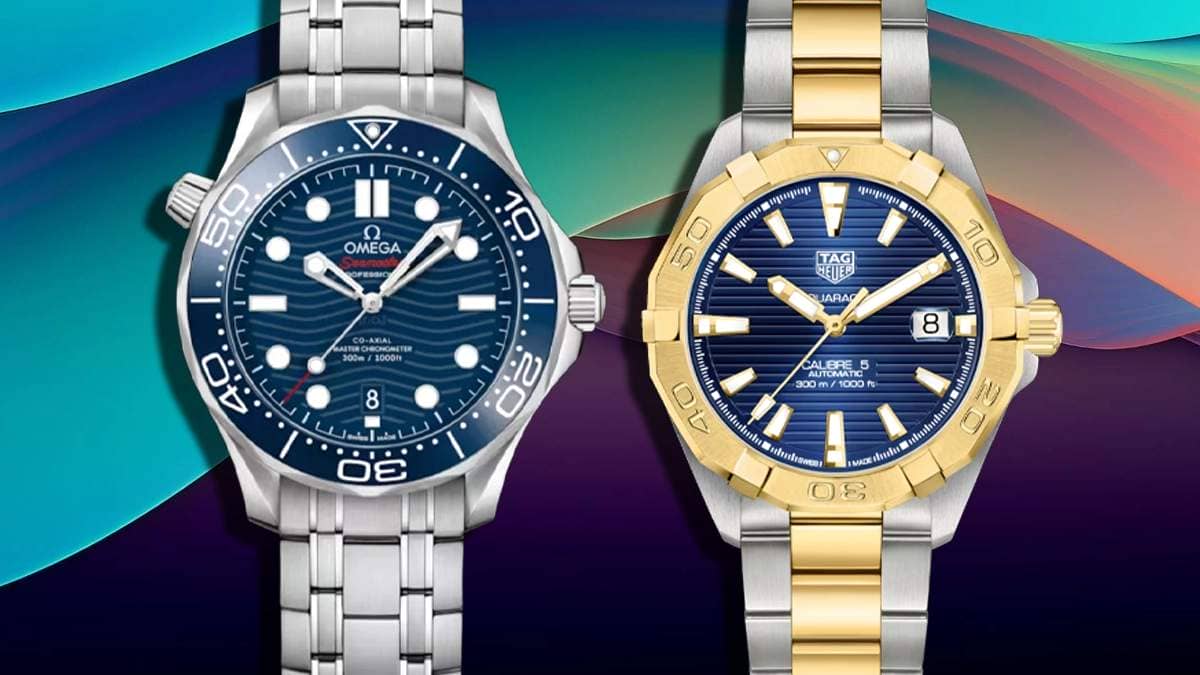
In the world of luxury Swiss watches, TAG Heuer watches and Omega watches both hold prestigious positions, but they each attract different types of watch enthusiasts. Omega watches are renowned for their historical milestones, precision, and elegance, making them a go-to for those who appreciate tradition and craftsmanship. On the other hand, TAG Heuer watches are more aligned with the thrill of motorsports and cutting-edge innovation, appealing to a younger, sportier demographic. So, when we look at Omega vs TAG Heuer in 2025, how do these two icons of Swiss watchmaking compare? Let’s dive in.
Can Brands Like TAG Heuer Ever Outdo Brands Like Omega?
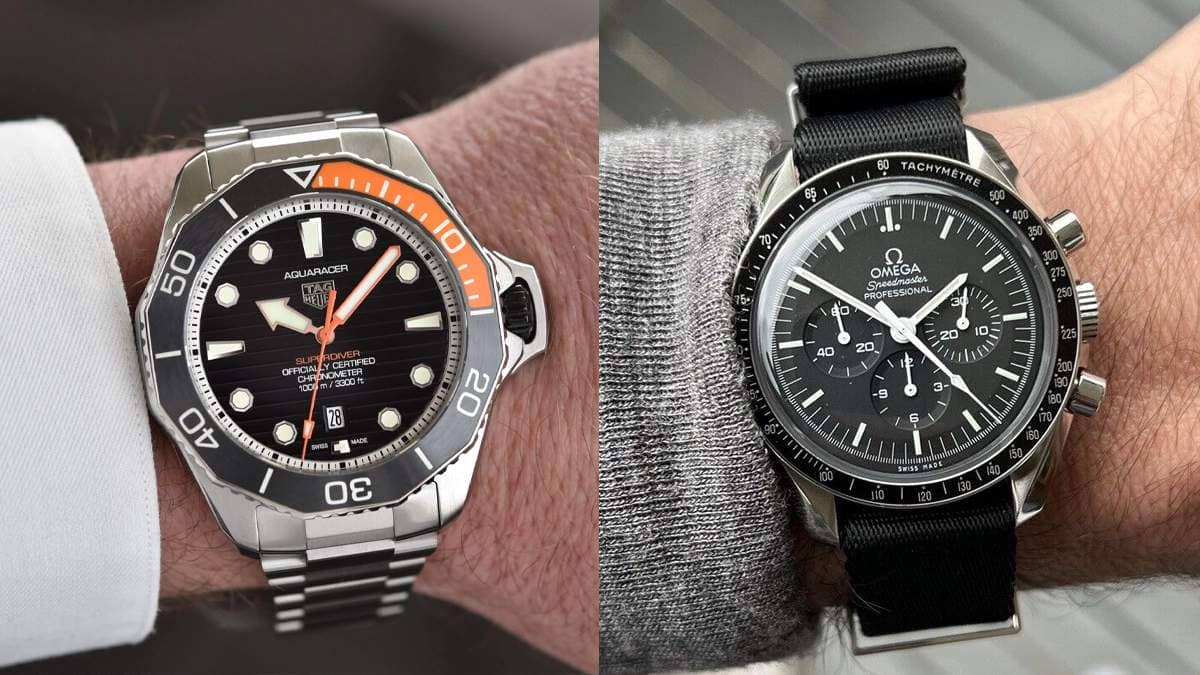
When we talk about Omega, we’re diving deep into a rich history of technical breakthroughs, including the introduction of their Co-Axial escapement in 1999, which revolutionized mechanical watchmaking by reducing friction, ensuring better long-term performance. Omega’s watches are known for their anti-magnetic features, with some of their movements resistant to up to 15,000 gauss, making them the first choice for anyone who values precision under extreme conditions. Then there’s the Master Chronometer certification—guaranteeing timekeeping accuracy within a staggering 0/+5 seconds per day. That’s Omega’s tech edge.
Now, let’s look at TAG Heuer. TAG isn’t exactly sitting on its laurels when it comes to innovation. Their chronograph movements, like those found in the Monaco and Carrera models, have long been at the forefront of the industry. Not to mention, TAG Heuer has also ventured into the smartwatch game with their Connected line, targeting the younger, tech-savvy crowd. But TAG Heuer’s true strength lies in chronograph technology. Take the TAG Heuer Mikrograph, introduced in 2012, which measures 1/100th of a second—impressive, right?
Still, if we’re comparing these brands purely on technological advancement, Omega currently holds the edge. Their Co-Axial escapement, combined with Master Chronometer certification and anti-magnetic technology, is more advanced and revolutionary than TAG Heuer’s incremental innovations.
In terms of luxury Swiss watches, Omega is firmly planted at the high end of the spectrum. The brand carries a certain level of gravitas, making its watches feel timeless and valuable. Its timepieces often feature high-end materials like precious metals and ceramics, adding to the sense of prestige. On the flip side, TAG Heuer, while a highly respected name in the watchmaking world, sits more comfortably in the “entry level luxury watches” category, appealing to those who seek sporty and affordable luxury, but not necessarily the refined craftsmanship of a brand like Omega.
Then there’s the all-important question of market positioning. Omega has carved out its niche as a luxury powerhouse, competing with other high-end brands like Rolex and Patek Philippe. Its watches hold their value well, and their reputation as icons of luxury only adds to their desirability. TAG Heuer, though respected, tends to cater to a younger, sportier audience, leaning into the affordable luxury space. While TAG Heuer is a favorite among motorsport fans and younger collectors, its market perception doesn’t carry the same prestige as Omega’s. Omega’s connections with space exploration, Olympic history, and high-profile celebrity endorsements—such as Daniel Craig’s portrayal of James Bond—further elevate its status in the luxury watch world.
So,reflecting on the question we’re here for? The simple answer is, probably not—at least not in the near future. Omega’s technological innovations, combined with its longstanding prestige and higher market positioning, make it a tough competitor for any brand, including TAG Heuer. While TAG Heuer is a trailblazer in motorsport-inspired chronographs and smartwatches, it still lacks the deep-rooted history and recognition that Omega has cultivated over more than a century. Sure, TAG Heuer is beloved for its sporty aesthetic and approachability, but when it comes to luxury Swiss watches that have truly stood the test of time, Omega’s reputation remains unparalleled.
TAG Heuer, however, is still a great choice for those looking for precision, style, and a brand that reflects an active lifestyle. But if we’re talking about outdoing Omega? That’s a tall order.
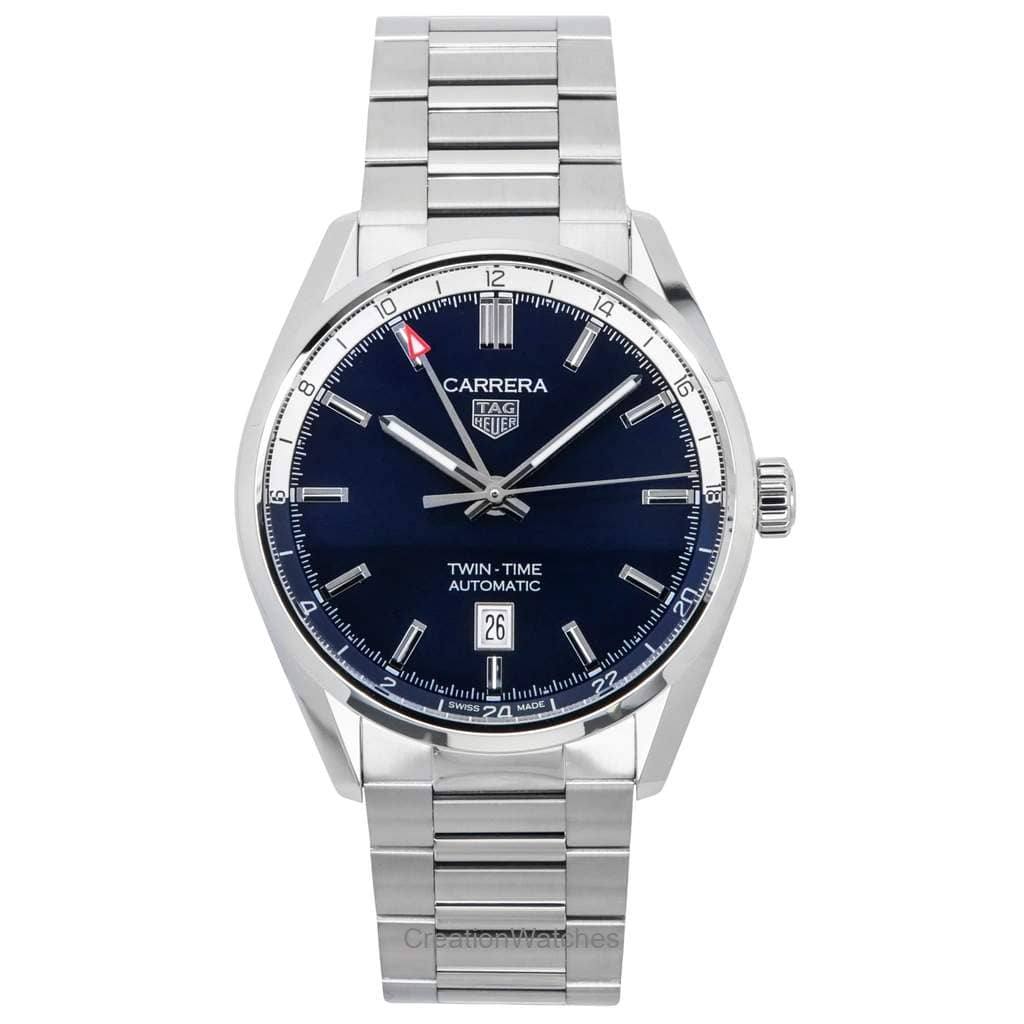
Tag Heuer Carrera Twin-Time GMT Stainless Steel Blue Dial Automatic WBN201A.BA0640 100M Men's Watch
TAG Heuer Watches

TAG Heuer has long been associated with motorsports, precision timing, and a blend of sporty yet luxurious designs. Founded in 1860 by Edouard Heuer, the Swiss brand quickly earned a reputation for its chronograph technology. TAG Heuer made its mark early with its oscillating pinion in 1887, a key innovation that still plays a major role in chronograph movements today. As the decades rolled on, TAG Heuer’s focus on motorsports grew, particularly through its legendary Carrera, Monaco, and Formula 1 collections.
The Carrera, released in 1963, was inspired by the Carrera Panamericana, a notorious Mexican road race. This line emphasized readability, precision, and durability, making it an instant favorite among racing enthusiasts. If you’re into sleek, functional chronographs, the Carrera’s minimalist design and chronograph features make it a go-to choice. Similarly, the Monaco, launched in 1969, broke away from convention with its square case. It wasn’t just a design statement, but a symbol of precision, as evidenced by its famous connection to Steve McQueen in the film Le Mans.
But TAG Heuer doesn’t rest on its laurels. In the 2000s, the brand introduced the Aquaracer, a dive watch designed for water sports. Its robust design and water resistance capabilities made it a worthy competitor to models like the Omega Seamaster. The Formula 1 collection, launched in 1986, continues to provide an entry point for those seeking affordable luxury watches that maintain the brand’s motorsport pedigree. TAG Heuer’s innovation didn’t stop with mechanical watches either, as they ventured into the smartwatch market with their Connected series, aiming to merge traditional aesthetics with modern technology.
While TAG Heuer chronographs like the Carrera continue to attract attention, the brand’s emphasis on motorsports and technology gives it a slightly sportier and less refined reputation compared to Omega watch craftsmanship. Nonetheless, the brand’s focus on high-quality materials, including ceramic and titanium, ensures that TAG Heuer continues to attract watch lovers looking for rugged yet elegant timepieces.

Tag Heuer Aquaracer Professional 200 Stainless Steel Grey Dial Quartz Diver's WBP1111.BA0627 200M Men's Watch
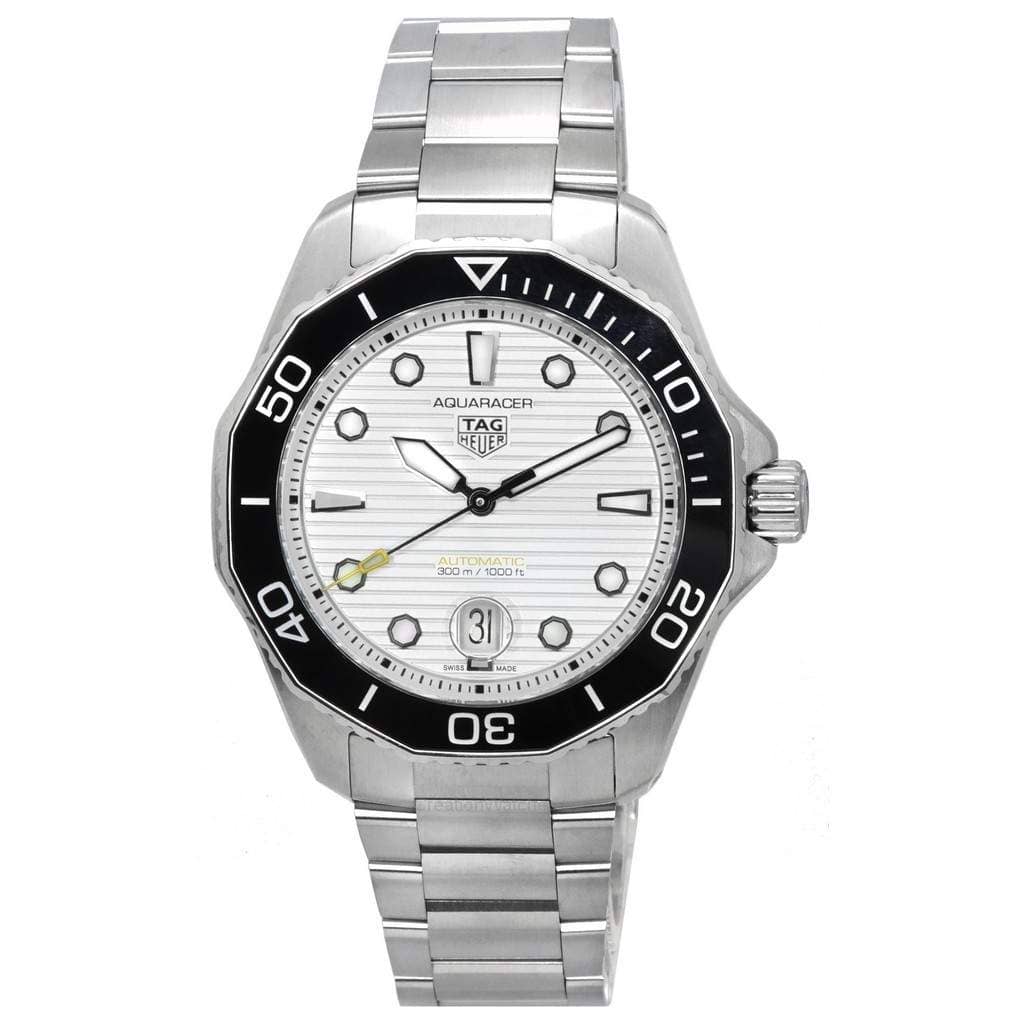
Tag Heuer Aquaracer Professional 300 Grey Dial Automatic Diver's WBP201C.BA0632 300M Men's Watch
Omega Watches
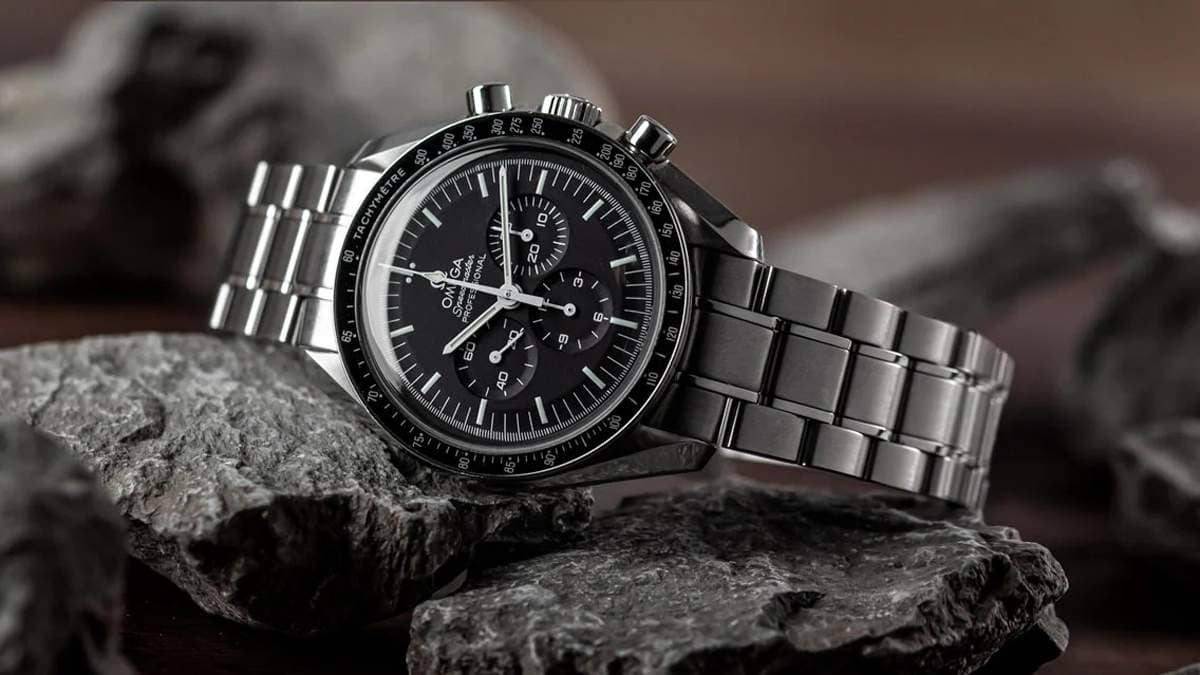
In contrast, Omega watches are synonymous with precision, history, and innovation. Founded in 1848 by Louis Brandt, Omega has had a profound impact on horology, achieving some remarkable milestones along the way. Perhaps most famously, the Omega Speedmaster was the first watch worn on the Moon during the Apollo 11 mission, forever cementing its place in history. The Speedmaster became a symbol of space exploration, and it’s hard to argue against its legendary status.
The Omega Seamaster, another key collection, made waves with its water-resistant designs, particularly the Seamaster 300 introduced in the 1950s. Omega’s innovations in anti-magnetic technology and Master Chronometer movements place it at the forefront of mechanical watch advancements. The Seamaster Diver 300M, which gained popularity through its association with James Bond in the 1990s, exemplifies the brand’s ability to blend sophistication with high-performance features.
Omega’s watch history is rich with technological breakthroughs. The introduction of the Co-Axial escapement in 1999 by George Daniels helped reduce friction, ensuring Omega’s watches would have long-term accuracy and durability. The Master Chronometer certification Omega offers today guarantees timekeeping accuracy that few brands can match, ensuring Omega watches stand as paragons of reliability and precision.
One of the standout aspects of Omega’s collections, including the Omega Seamaster and Omega Speedmaster, is their versatility. While Omega watch collections cater to diving, space exploration, and even dress watches, the brand’s appeal lies in its ability to cater to all occasions. Whether you’re diving 300 meters deep or attending a high-profile event, Omega’s blend of elegance and precision ensures that it holds its own against some of the best luxury Swiss watches.
TAG Heuer vs Omega Watches
When it comes to Swiss watches, comparing TAG Heuer watches and Omega watches is like comparing two iconic athletes from different sports (like Polo and F1). While both have earned their place in horology, their strengths, and appeal lie in very different arenas. Omega watches are known for their deep-rooted legacy, premium craftsmanship, and precision, making them a sought-after choice among serious collectors and those who appreciate heritage. On the flip side, TAG Heuer watches are built for those who love speed, sports, and a touch of modern innovation. So, how do these two stack up? Let’s dive into their collections, specialties, and popularity to see where they truly shine in 2025.
Collections
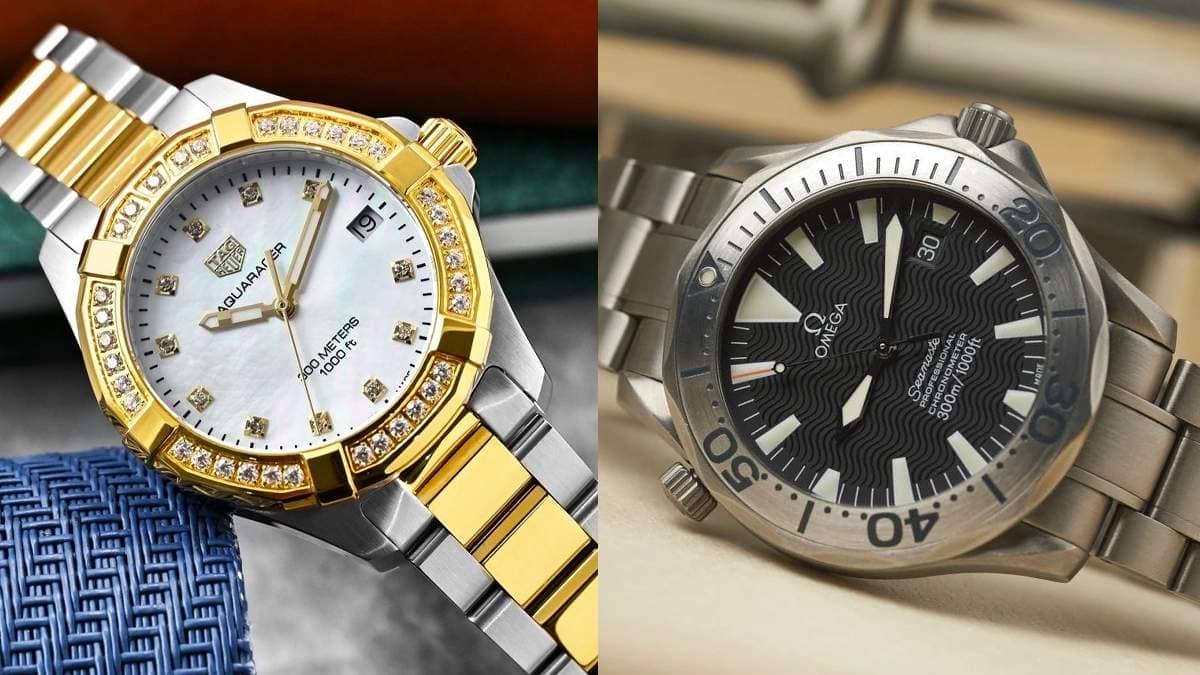
When it comes to collections, both Omega and TAG Heuer have a solid roster of models that cater to different lifestyles and tastes. Omega’s Speedmaster and Seamaster are iconic in the world of luxury watches. The Omega Speedmaster, often dubbed the “Moonwatch,” is deeply tied to the history of space exploration, having been worn during the Apollo missions. It’s a watch with a legacy—Omega watch craftsmanship at its finest. The Seamaster, introduced in 1948, remains one of the most reliable dive watches ever made, especially with models like the Seamaster Diver 300M, which found fame through the James Bond films.
On the other hand, TAG Heuer has a more sporty, motorsport-driven appeal. The Carrera, introduced in 1963, is a tribute to the Carrera Panamericana race and is designed for the adrenaline-loving crowd. Then there’s the Monaco, a bold square-cased model that became a style icon, thanks to Steve McQueen’s association with the film Le Mans. The Aquaracer, another standout from TAG Heuer, is known for its ruggedness and is often compared to the Omega Seamaster due to its durability and focus on water sports. TAG Heuer’s collection embraces that sporty edge, whereas Omega’s designs feel more rooted in tradition and timeless elegance.
Speciality
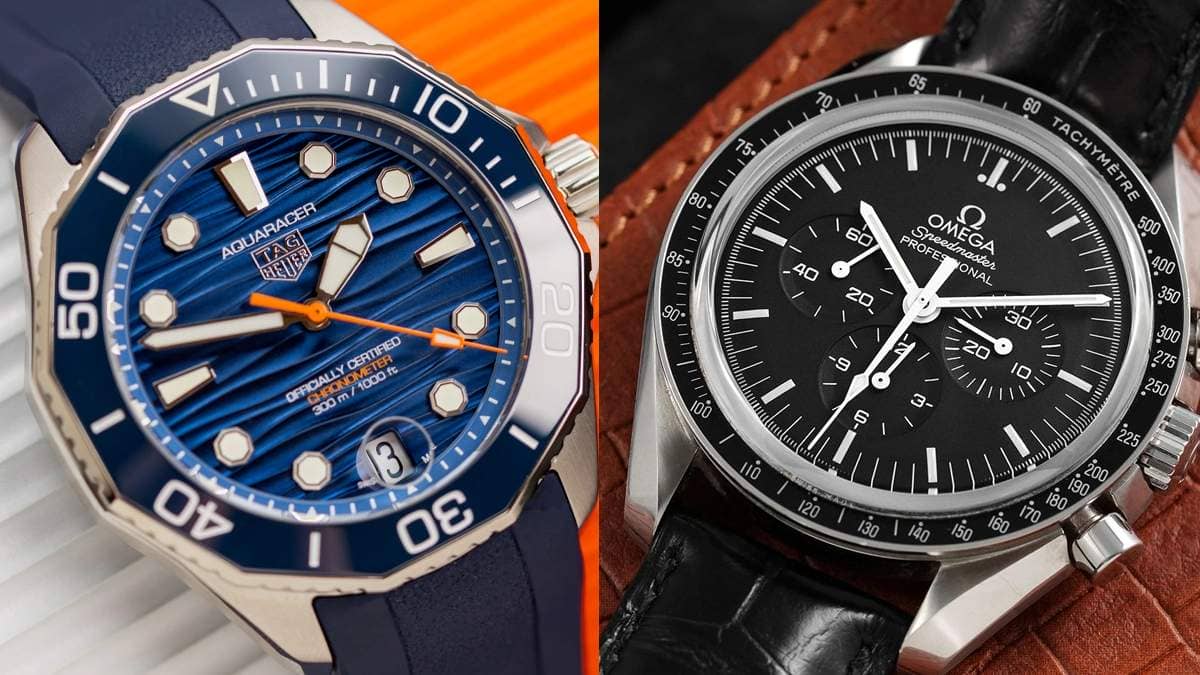
When we talk about specialty, Omega vs TAG Heuer brings us into two very different worlds. Omega stands out with its groundbreaking innovations like the Co-Axial escapement, which reduces friction and enhances the precision of the movement, leading to longer-lasting accuracy. The Omega Master Chronometer certification, ensuring timekeeping accuracy within 0/+5 seconds per day, sets a benchmark for reliability. Additionally, Omega’s anti-magnetic technology makes its watches some of the most resistant to external influences like magnetic fields. If you’re looking for best luxury watches for men that combine history with cutting-edge tech, Omega is hard to beat.
In contrast, TAG Heuer has built its name on chronograph technology and motorsport innovation. The TAG Heuer Mikrograph, for instance, is a high-frequency chronograph that measures time with an accuracy of 1/100th of a second. The Heuer 02 movement that powers many of their Carrera and Monaco models is another example of TAG Heuer pushing the boundaries of precision in a sporty context. But what really sets TAG Heuer apart is its entry into the smartwatch world. The TAG Heuer Connected series is a fusion of traditional luxury with modern tech, appealing to younger, tech-savvy consumers who want a luxury timepiece with smart features. TAG Heuer’s watch accuracy is impressive, but their focus remains on blending style with function, particularly for those who love speed.
Popularity
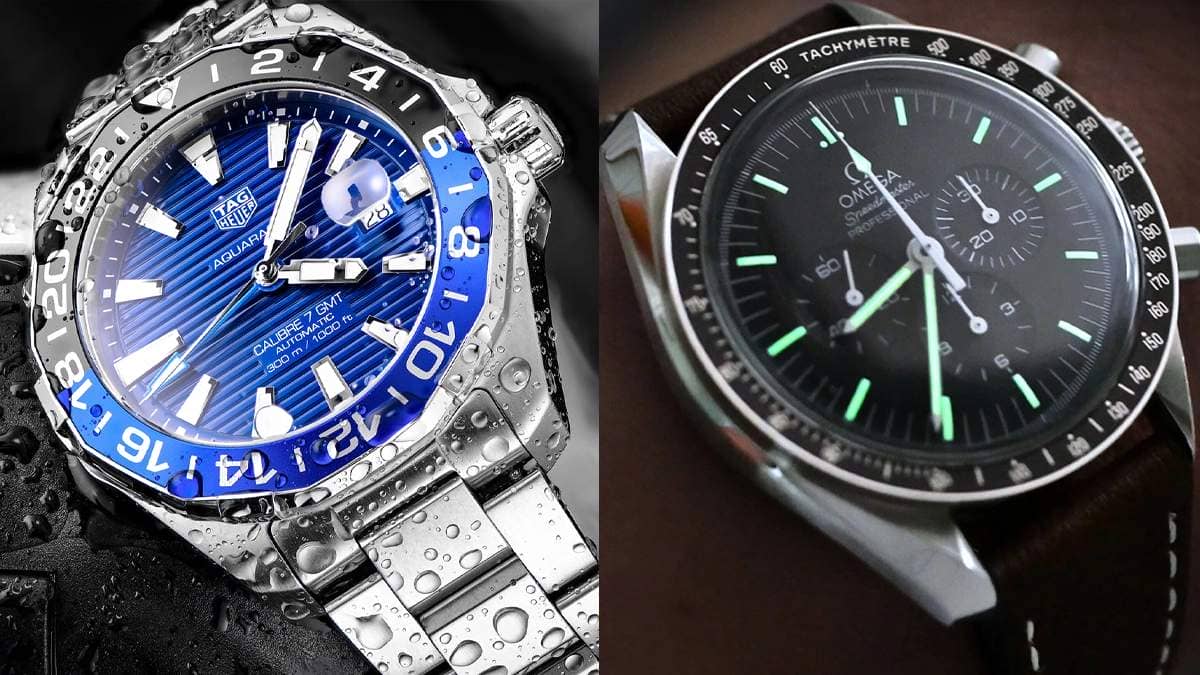
The popularity of TAG Heuer and Omega lies in their loyal followings, but they appeal to slightly different demographics. Omega’s reputation as a symbol of luxury and precision is undisputed. With its ties to space exploration, the Olympic Games, and high-profile figures like James Bond, Omega holds a more traditional appeal. Omega watch investment is often considered a safe bet in the luxury watch world, as its watches retain their value well in the resale market. The Omega Speedmaster and Omega Seamaster are timeless pieces that are not only revered for their reliability but also for their association with cultural milestones. Omega vs TAG Heuer resale value is an interesting comparison, with Omega watches generally holding their value better over time, particularly models with limited runs or unique associations.
TAG Heuer, on the other hand, leans towards a younger, sportier audience, which finds the brand’s ties to motorsports and innovation appealing. The brand’s popularity is heavily driven by its partnership with racing teams and its association with figures like Steve McQueen. The Formula 1 and Monaco collections have made TAG Heuer a favorite among those seeking affordable luxury watches that still boast top-tier performance and styling. However, when comparing TAG Heuer vs Omega quality, Omega is often seen as the more prestigious option, with its more traditional appeal and refined craftsmanship. TAG Heuer does a fantastic job of offering sporty luxury, but Omega’s overall reputation places it a few notches higher in the luxury hierarchy.
Conclusion

When we talk about luxury Swiss watches, comparing Omega and TAG Heuer is like comparing a polo match to an F1 race. Both are thrilling in their own right, but one is built for tradition and prestige, while the other is made for speed and modern flair. Omega watches carry the weight of historical achievements, precise craftsmanship, and iconic models like the Speedmaster and Seamaster, making it a symbol of luxury and timeless appeal. On the other hand, TAG Heuer watches are steeped in motorsport culture, with a youthful, sporty edge. With models like the Carrera and Monaco, TAG Heuer caters to those who crave precision but also a dash of adrenaline.
Let’s face it—when we look at Omega vs TAG Heuer, Omega is clearly better in overall quality and reliability. Omega’s Co-Axial escapement and Master Chronometer certification put it ahead of TAG Heuer in terms of mechanical innovation. The brand’s association with space exploration and the Olympics gives it unmatched prestige, and its watches, particularly the Omega Speedmaster, are not just tools; they’re pieces you can pass on as your legacy.
Meanwhile, TAG Heuer, while excellent for chronograph enthusiasts and fans of motorsports, still doesn’t match Omega’s long-standing reputation. It’s a solid luxury Swiss watch choice for those entering the market but lacks the resale value and investment potential of Omega watches. If you’re looking for a watch that not only tells time but tells a story, Omega is the obvious pick. After all, you don’t wear a polo to an F1 race, and when it comes to horology, Omega is the one you want on your wrist.